2. Airspace
2.1 FIR Overview
SECTOR DIAGRAM
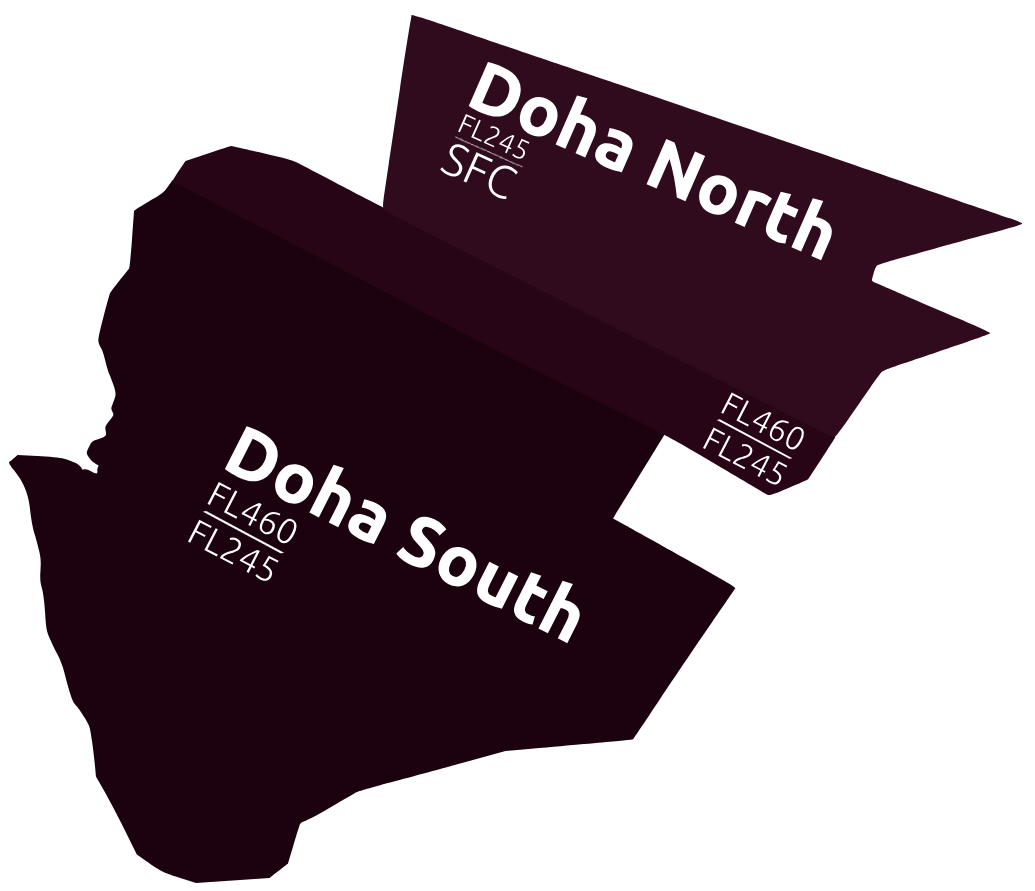
To effectively manage traffic and reduce controller workload during peak periods, the Doha FIR may be divided into up to two sectors. Each sector is assigned responsibility for a specific traffic flow, such as departures, arrivals, or transit flights.
| Position | Sector | Frequency |
|---|---|---|
| OTDF_1_CTR | North/Bandbox | 135.725 |
| OTDF_2_CTR | South | 132.975 |
2.2 Sector N
2.2.1 Radar & Radio Limitations
Sector N covers enroute traffic in Doha FIR via GESIT, GIRMO, and KUKDA from FL245 - FL460.
Sector N also provides coverage for enroute traffic entering the Doha FIR via ORMID, ALPOB, TUMAK, DEGSO, ASROK, BORUK, EGNIM, and ORBOS from SFC - FL245.
2.2.2 Typical Traffic Flows & Conflicts
Sector N handles enroute from and into the U.A.E FIR from the East and Bahrain FIR from the West.
2.2.3 Coordination Requirements
Controllers shall maintain longitudinal separation minima as per Section 1.2.2 when coordinating with surveillance FIRs.
2.3 Sector S
2.3.1 Radar & Radio Limitations
Sector B manages traffic via TULUB, LUBET, HAYYA, and ALVEN from FL245 - FL460.
2.3.2 Typical Traffic Flows & Conflicts
This sector is responsible for inbounds and outbounds from and into the Doha TMA.
2.3.3 Coordination Requirements
Controllers must apply longitudinal separation minima per Section 1.2.2.
2.4 Free Route Airspace
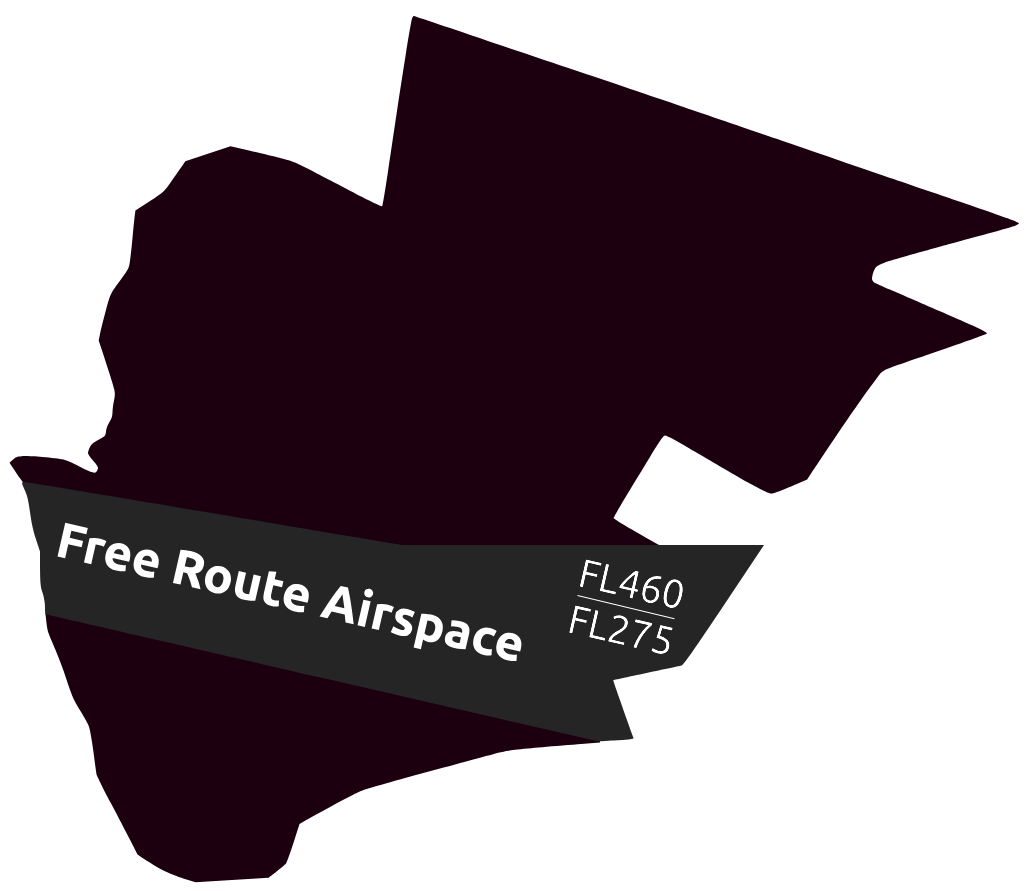
The Doha FIR provides Free Route Airspace (FRA) between FL275 and FL410, allowing aircraft to fly more direct routes between designated FRA points instead of following the fixed ATS airway network. This improves flight efficiency by reducing track miles and fuel consumption.
| Significant FRA Points | Notes |
|---|---|
| BUNDU | Compulsory Exit Point |
| ULIKA | Compulsory Exit Point |
| KUPRO | Compulsory Exit Point |
| ORLEK | Compulsory Entry Point |
| TOSNA | Compulsory Entry Point |
| TOVOX | Compulsory Entry Point |
| DOH | Compulsory Intermediate Point |
| GINTO | Compulsory Intermediate Point |
| KUPSA | Compulsory Intermediate Point |
| LAGNO | Compulsory Intermediate Point |
2.5 Connection Hierarchy
| Position | Prerequisite Sector | Notes |
|---|---|---|
| OTDF_1_CTR | N/A | Bandbox Position |
| OTDF_2_CTR | OTDF_1_CTR |
2.6 Sector Top-down Coverage
When the lower sector is offline, in addition to the designated areas of responsbility, top-down sector coverage shall be as follows:
- OTDF_1_CTR (Bandbox): Provides Coverage for enroute traffic as per Section 2.2.
- OTDF_2_CTR (South): Provides coverage for Doha, Al-Udeid, and Dukhan Airbase TMAs.